Introduction
It was during one of those long afternoons watching dan hooker benoit saint denis | deportivo – real madrid c. f. femenino that I first noticed the persistent ache in my heels. I had been standing for hours, moving between kitchen and living room, completely absorbed in the match while my feet protested silently. The discomfort started as a dull throb but gradually sharpened into something that demanded attention. I didn’t realize at the time that this would be the beginning of a journey toward understanding how proper footwear could change my daily experience of pain and mobility.
For years, I had accepted foot discomfort as normal—something that came with being on your feet, something you just endured. I had various pairs of flats and loafers that looked stylish enough but left me counting down the hours until I could take them off. The connection between what I put on my feet and how I moved through my day hadn’t fully registered until that moment, watching athletes move with such effortless grace while I shifted my weight from foot to foot, trying to find relief.
The realization came slowly, almost reluctantly. I had always prioritized appearance over comfort when it came to shoes, assuming that supportive footwear meant sacrificing style. But as the match continued, my attention kept drifting from the screen to my own discomfort, creating a strange parallel between the athletes’ optimized performance and my own compromised mobility. It was this juxtaposition that finally pushed me to reconsider my approach to footwear.
Real-life Context
My daily routine involves more walking and standing than I had ever accounted for. Between commuting to work, moving through office corridors, running errands during lunch breaks, and then household tasks in the evening, I probably spend eight to ten hours on my feet most days. The office environment, with its hard flooring and constant movement between meetings and desks, became particularly challenging. I noticed I was making excuses to sit down more often, sometimes even taking longer routes just to avoid standing in one place for too long.
Casual outings that should have been enjoyable—meeting friends for coffee, browsing bookstores, even simple grocery shopping—became exercises in endurance. I’d find myself looking for benches or leaning against walls, my enjoyment of these moments diminished by the background awareness of foot pain. Social events where I needed to stand for extended periods filled me with dread rather than anticipation. I started declining invitations or leaving early, something that felt completely out of character for someone who typically enjoys being around people.
The pattern was clear: my footwear choices were limiting my life in small but significant ways. I had pairs of shoes designated for specific activities based on how much discomfort I could tolerate rather than what I actually wanted to wear. Some were reserved for short outings, others for days when I knew I could sit frequently, and a few that I only wore when appearance absolutely had to trump comfort. This compartmentalization of my footwear felt increasingly absurd, like I was working around a problem rather than addressing it.
What made this realization particularly frustrating was that I considered myself relatively active and health-conscious. I paid attention to nutrition, tried to get regular exercise, and generally made choices that supported my wellbeing. Yet here I was, ignoring what was literally the foundation of my mobility. The disconnect between my overall approach to health and my acceptance of daily foot pain became impossible to ignore.
Observation
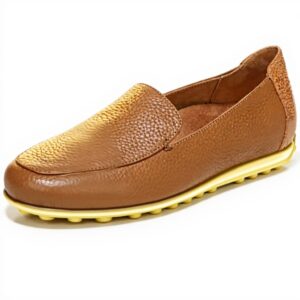
The first thing I noticed about the Vionic Elora Loafers was how different they felt from any other flats I had owned. The arch support was immediately apparent—not in an intrusive way, but as a definite presence that cradled my foot in a manner I hadn’t experienced before. Where other shoes felt flat and unforgiving, these had a contour that seemed to understand the shape of a human foot. The cushioning provided a softness that didn’t compromise stability, creating this interesting balance between comfort and support.
I wore them initially for just a few hours around the house, following the suggestion to allow a gradual break-in period. What surprised me was that they didn’t feel like they needed breaking in at all. The leather was supple but structured, moving with my foot rather than against it. The flexible sole allowed for natural movement while the Vio Motion Technology provided this subtle guidance that felt both supportive and freeing. It was unlike any breaking-in experience I had with previous shoes, which usually involved blisters and sore spots before eventual comfort.
After a week of regular wear, patterns started emerging in my daily experience. I noticed I was standing differently—my weight distributed more evenly, less shifting from foot to foot during long periods of standing. The heel pain that typically developed by mid-afternoon simply didn’t appear. Even more remarkably, I found myself more willing to take the stairs, to walk rather than drive short distances, to stand and chat with colleagues instead of looking for the nearest chair. Small behaviors I hadn’t even recognized as pain-avoidance strategies were gradually disappearing.
The design elements that initially seemed like minor details revealed their importance through daily use. The quality leather construction meant the shoes maintained their shape day after day, unlike cheaper flats that quickly sagged and lost support. The available sizes accommodated my foot perfectly—I chose the 6.5 UK after carefully considering the size options, and the fit was precise without being restrictive. The Toffee Leather color worked with both casual and work outfits, eliminating the need for multiple shoe changes throughout the day.
Reflection
It took me several weeks to fully appreciate what was happening. The changes were so gradual, so integrated into my daily life, that I almost missed their significance. I was simply going about my days with greater ease, less conscious of my feet, more present in whatever I was doing. The realization came one evening when I found myself spontaneously deciding to walk to a bookstore about a mile away—something I hadn’t done in months because I knew the return journey would be painful.
I didn’t realize at the time that this would be so important, but proper arch support does more than just alleviate pain—it changes how you engage with your environment. The Vio Motion Technology’s fous on stability and alignment meant I was walking more efficiently, with better posture, less fatigue. I started noticing other benefits too: less lower back stiffness at the end of the day, more energy in the evenings, even improved sleep quality. The interconnectedness of foot health with overall wellbeing became vividly clear in ways I had never considered.
This experience made me reflect on how we often accept discomfort as inevitable when solutions might be readily available. I had assumed that foot pain was just part of adult life, especially for someone who spends significant time standing and walking. The concept that specific design features like arch support could fundamentally change this experience hadn’t really registered until I lived the difference. It reminded me that sometimes we normalize our limitations rather than seeking ways to overcome them.
The relationship between design and daily experience became particularly interesting to observe. The way the shoes promoted proper alignment wasn’t something I consciously thought about while wearing them—it just happened naturally. The technology worked in the background, supporting without demanding attention. This subtle effectiveness struck me as particularly thoughtful design: addressing a need without making the solution the center of attention. The shoes became tools for better living rather than medical devices, integrated seamlessly into ordinary life.
Conclusion
Looking back at that initial moment of discomfort during dan hooker benoit saint denis | deportivo – real madrid c. f. femenino, I recognize it as the starting point of a significant shift in how I approach footwear and daily comfort. What began as a search for relief from heel pain evolved into a broader understanding of how proper support influences movement, energy, and overall quality of life. The journey from accepting discomfort to discovering solutions has changed not just what I wear on my feet, but how I move through my days.
The lasting impact extends beyond the absence of pain. I find myself more willing to embrace spontaneous opportunities that involve walking or standing, more present in social and professional situations, generally more engaged with my surroundings. The psychological shift has been as meaningful as the physical one—from anticipating discomfort to expecting comfort, from limiting my activities to expanding them. This change in expectation has subtly influenced many aspects of how I approach daily life.
What stays with me most strongly is the realization that sometimes the solutions to persistent problems are neither dramatic nor complicated. In this case, it was simply understanding that footwear designed with proper support technology could transform an experience I had accepted as fixed. The Vionic Elora Loafers, with their focus on arch support and alignment, provided that understanding through lived experience rather than theoretical benefits. They became the vehicle for recognizing that comfort and style need not be competing priorities.
The journey from that initial moment of pain to my current experience of supported comfort has been one of gradual discovery and quiet transformation. It’s a reminder that sometimes the most significant changes come not from dramatic interventions but from thoughtful adjustments to the ordinary elements of our lives. The right support, it turns out, can change not just how your feet feel, but how you move through the world.