Introduction
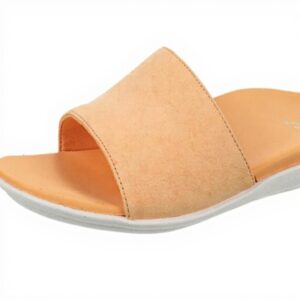
I never thought much about arch support until this summer. The name Federer kept appearing in my searches for comfortable footwear, leading me to discover something beyond tennis courts. These Vionic sandals arrived during a heatwave, their orange hue reminding me of sunset walks. What started as a simple search for breathable shoes became a quiet education in how proper support feels when you’re not expecting it.
Real-life Context
My neighborhood has these cracked sidewalks that slope toward the street. For years, I’d accepted the slight ankle tilt as normal. Then came July, when the pavement radiates heat through thin soles and every errand feels like a negotiation with discomfort. I remember slipping these sandals on for the first time—the leather straps felt substantial, not flimsy. The wide band across my foot made me pause. It wasn’t the delicate strap I’d expected from women’s sandals. Walking to the corner store that first evening, I noticed how my heels settled into the footbed differently. The sound of the rubber outsole meeting hot concrete had a solid, muted quality. No slap or slide. Just a series of quiet steps where I usually heard my own fatigue.
What surprised me was how the sandals worked in transitional spaces. Moving from my cool kitchen tiles to the sun-baked driveway, the temperature change registered less sharply through the sole. Waiting in line at the post office, I found myself shifting weight naturally rather than seeking relief. The three-zone comfort technology became apparent not as a marketing term but as a physical experience—the arch support gently guiding my posture without demanding attention. I didn’t realize at the time how much that small detail would matter during longer outings.
Detailed Observation
The learning curve came during the first few wears. The podiatrist-designed footbed requires your feet to actually use the arch support rather than just rest on it. Initially, my muscles noticed the change. It wasn’t discomfort so much as awareness—like remembering how to stand properly after slouching for years. The wide fit accommodated my feet without pressure points, but the structured support meant I couldn’t just drag my steps. I had to walk with intention.
- The leather upper develops subtle creases at the stress points, mapping your movement patterns
- After two weeks of regular wear, the footbed molds slightly while maintaining its supportive structure
- The rubber outsole shows minimal wear even on rough pavement surfaces
- Color retention remains consistent despite exposure to sunlight and occasional moisture
What caught me off guard was how the sandals performed on different surfaces. The uncovered EVA midsole provides enough cushion on hard floors without feeling spongy on grass. On a recent visit to the botanical gardens, I noticed how the sole gripped uneven garden paths without collecting debris. The stability during movement comes from that combination of flexible upper and firm ach support—your foot moves within a guided range rather than sliding unpredictably.
Reflection
To be honest, I used to prioritize style over substance with summer footwear. These sandals made me reconsider what I’d been missing. The podiatrist-designed element isn’t just about medical benefits—it’s about how your body aligns during the simplest activities. Standing at my kitchen counter preparing dinner, I noticed less lower back tension after being on my feet for hours. The subtle lift from the arch support changes how weight distributes through your whole posture.
Moving past the surface, I began appreciating the design intelligence. The wide band isn’t just aesthetic—it provides lateral stability that thinner straps can’t offer. The Arancio color, which initially seemed merely cheerful, actually hides dust and minor scuffs better than I anticipated. During a sudden afternoon shower, the leather dried without stiffening, maintaining its shape while other synthetic materials might have warped. The texture of the footbed against bare skin becomes familiar over time—a slight graininess that prevents slipping without abrasive friction.
I’ve come to see these as transitional shoes in another sense too. They bridge the gap between purely functional footwear and something you’d willingly choose for style. The sleek design works with summer dresses without looking orthopedic, while the biomechanical support means you’re not sacrificing comfort for appearance. There’s a quiet confidence in wearing shoes that work with your body rather than against it.
Conclusion
These sandals taught me that support doesn’t have to shout. It can arrive quietly through thoughtful design—a wide band here, a podiatrist-inspired contour there. The Federer connection, while initially mysterious, now makes sense in terms of grace under pressure. Not every product needs to revolutionize your life. Sometimes the value lies in how something improves your ordinary moments. The slight squeak of leather when you first slide them on. The way your footsteps sound different on various surfaces. The realization that comfort can be both immediate and learned. After this summer, I’ll never see arch support as merely functional again. It’s the difference between just wearing shoes and actually walking in them.